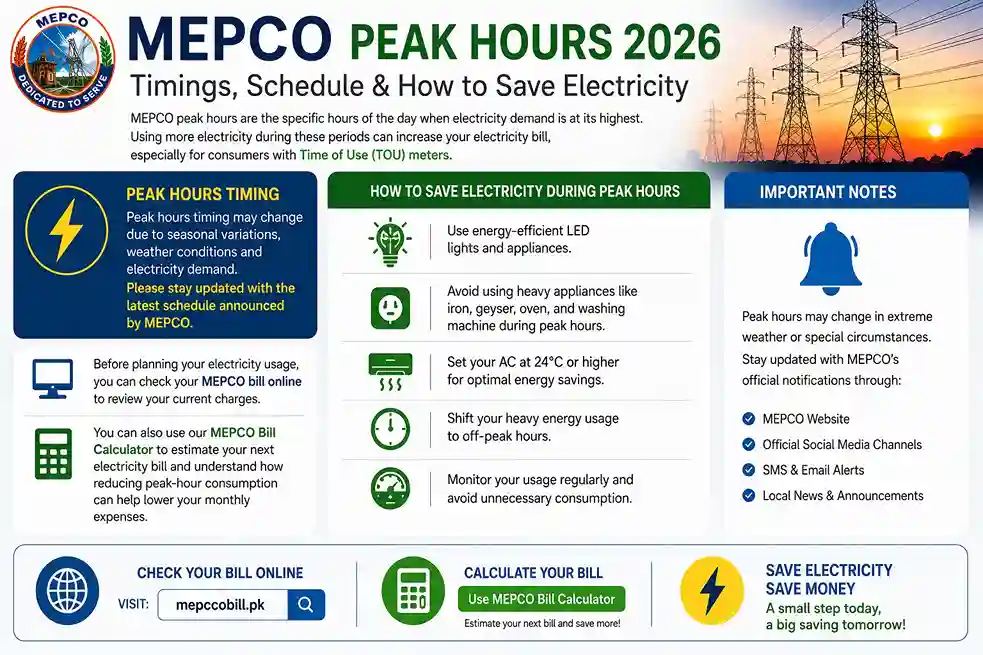
MEPCO Peak Hours 2026 – Timings, Schedule & How to Save Electricity
MEPCO Peak Hours are the specific times of the day when electricity demand is at its highest. Using high-power appliances during these hours can lead to higher electricity costs, particularly for consumers who have Time of Use (TOU) meters. Understanding the peak-hour schedule can help you manage your electricity consumption more efficiently and reduce your monthly bill.
In this guide, you’ll find the latest MEPCO peak hours schedule, along with practical tips to help you reduce electricity usage during high-demand periods. Before planning your daily electricity consumption, you can check your MEPCO bill online to review your current charges and usage details. You can also use the MEPCO Bill Calculator to estimate your upcoming electricity bill and see how shifting electricity usage away from peak hours may help lower your monthly expenses.
Bilkul — main is content ko clean, professional, natural aur SEO-friendly English mein rewrite kar raha hoon, while keeping the same meaning and structure.
What Are MEPCO Peak Hours?
MEPCO peak hours are the specific periods of the day when electricity demand is at its highest. During these hours, the power distribution system operates under increased load, which can affect electricity costs and overall grid performance.
During MEPCO peak hours:
- Electricity may cost more for consumers using TOU (Time of Use) meters.
- The overall load on the electricity distribution system increases.
- Voltage fluctuations may be more likely during periods of high demand.
- Operating high-power appliances during peak hours can increase your electricity bill.
If you are applying for a new electricity meter connection, understanding peak-hour timings can also help you plan your future electricity usage more efficiently.
By avoiding unnecessary electricity consumption during peak hours and shifting heavy appliance usage to off-peak periods, you can potentially reduce your monthly electricity expenses and improve energy efficiency.
MEPCO Peak Hours Timing (2026)
MEPCO uses seasonal peak-hour schedules to help manage electricity demand throughout the year. Reducing electricity consumption during these periods can help control energy costs, particularly for consumers with Time of Use (TOU) meters.
| Season | Peak Hours |
|---|---|
| Summer (April to October) | 7:00 PM – 11:00 PM |
| Winter (November to March) | 6:00 PM – 10:00 PM |
Peak-hour timings can be changed or updated by MEPCO or the relevant electricity authorities. It is therefore advisable to check the latest schedule before planning your electricity usage.
Want to estimate how much your electricity consumption may cost? Use our MEPCO Bill Calculator to estimate your monthly bill based on your expected electricity usage.
Why Do MEPCO Peak Hours Matter?
Understanding MEPCO peak hours can help you manage your daily electricity consumption more effectively. Using less electricity during high-demand periods may help reduce unnecessary expenses and improve overall energy efficiency.
During peak hours:
- TOU consumers may pay higher electricity rates compared with off-peak periods.
- Certain consumer categories may be subject to maximum demand or load-related charges.
- Heavy electricity consumption during peak periods can have a greater impact on the monthly bill.
One simple way to manage electricity costs is to shift high-power appliances to off-peak hours whenever possible. This can help reduce peak-hour consumption while also lowering the overall demand on the electricity distribution system.
Appliances to Avoid During MEPCO Peak Hours
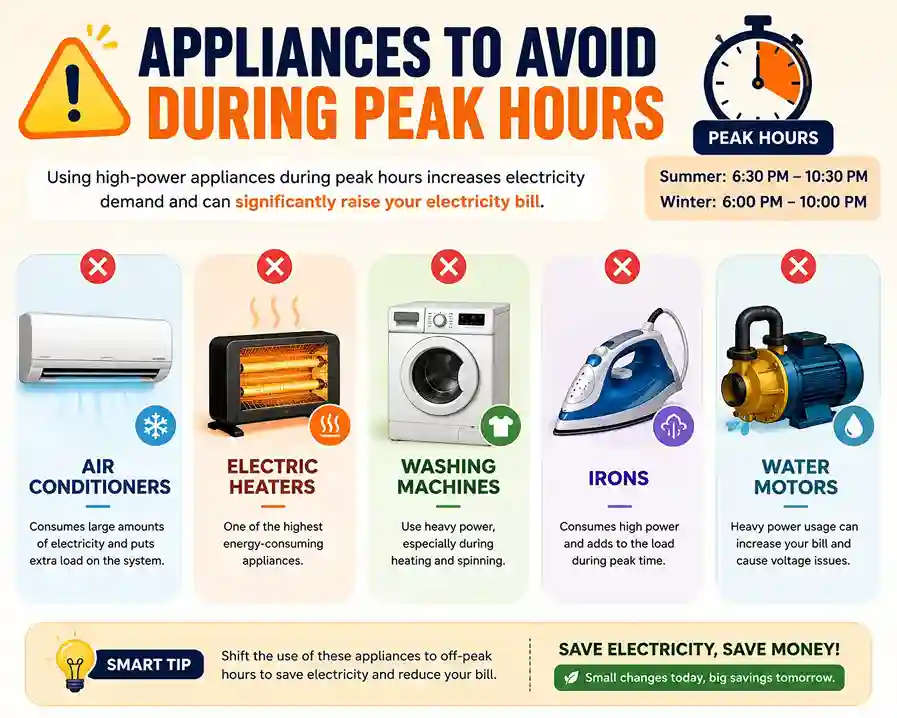
High-power appliances can consume a significant amount of electricity, particularly when used for long periods. If you want to reduce peak-hour consumption, consider operating these appliances during off-peak hours whenever practical:
- Air conditioners: Air conditioners can be among the largest electricity consumers in a household, especially during hot weather.
- Electric heaters: Electric heaters can draw substantial power while operating.
- Washing machines: Washing machines consume electricity during washing, heating, and spin cycles.
- Electric irons: Irons are high-wattage appliances that can add to household electricity consumption.
- Water motors and pumps: Water pumps can draw considerable power while running and may add to the electrical load.
Shifting the use of these appliances to off-peak periods can help you manage electricity consumption more efficiently, potentially reduce your monthly bill, and lower pressure on the power distribution system.
How to Reduce Your Electricity Bill During Peak Hours
During MEPCO peak hours, electricity costs can be higher for consumers on Time of Use (TOU) tariffs. Using electricity wisely and shifting high-power appliances to off-peak periods can help you manage your monthly bill more effectively.
Here are some simple ways to reduce electricity consumption during peak hours:
| Smart Tip | Explanation |
|---|---|
| Use appliances before or after peak hours | Run high-power appliances such as washing machines, irons, and water pumps during off-peak hours whenever possible. |
| Switch to LED bulbs | Replace traditional bulbs with energy-efficient LED lights to reduce electricity consumption. |
| Turn off unnecessary devices | Switch off lights, appliances, and electronic devices when they are not being used. Unplugging some devices can also reduce standby power consumption. |
| Use an inverter AC | Inverter air conditioners can adjust their power consumption according to cooling requirements, making them more efficient than many conventional AC units. |
| Set your AC to 26°C | Setting the air conditioner to around 26°C can provide comfortable cooling while helping reduce unnecessary electricity consumption. |
Benefits of Avoiding Peak Hours
Managing your electricity usage during MEPCO peak hours can help you control energy costs and use electricity more efficiently. Shifting heavy electricity consumption to off-peak periods can provide several benefits.
| Benefit | Explanation |
|---|---|
| Lower electricity bill | Moving high-power appliance usage to off-peak hours can help TOU consumers avoid higher peak-period rates. |
| Reduced system load | Lower electricity demand during peak periods helps reduce pressure on the power distribution system. |
| Improved voltage stability | More balanced electricity demand can help support a more stable power supply and reduce the likelihood of voltage fluctuations. |
| Better energy efficiency | Planning when you use high-power appliances can reduce unnecessary consumption and encourage more efficient energy use. |
Who Should Follow Peak Hours Carefully?
Peak-hour usage can have a greater impact on consumers who regularly use large amounts of electricity. Understanding peak timings and adjusting electricity consumption can help these users manage their energy costs more effectively.
High-Consumption Users
Consumers with high monthly electricity usage should pay particular attention to peak hours. Running several high-power appliances during peak periods can increase electricity costs, especially for users on TOU tariffs.
Commercial Users
Shops, offices, restaurants, and other businesses often operate multiple electrical appliances and equipment throughout the day. Where practical, businesses can shift non-essential heavy electricity usage to off-peak periods to help manage operating costs.
Small Industries
Small industrial units may use machinery, motors, and production equipment that consume significant amounts of electricity. Scheduling suitable production activities outside peak hours can help businesses manage electricity consumption more efficiently.
Homes That Frequently Use ACs or Heaters
Households that regularly use air conditioners or electric heating equipment may consume significantly more electricity. Using these appliances efficiently, maintaining suitable temperature settings, and avoiding unnecessary operation during peak hours can help control monthly electricity expenses.

Common Mistakes People Make
Many consumers unknowingly increase their electricity bills because they are not fully aware of how electricity usage during peak hours can affect their overall energy costs. Avoiding these common mistakes can help improve energy efficiency and keep monthly electricity expenses under control.
Running AC Continuously During Peak Hours
One of the most common mistakes is running an air conditioner continuously during peak hours. Since ACs are among the highest electricity-consuming appliances in many households, prolonged use during peak periods can significantly increase electricity consumption and may result in higher charges for consumers on applicable TOU tariffs.
Using Multiple Heavy Appliances Together
Operating several high-power appliances at the same time, such as air conditioners, irons, washing machines, and water motors, can cause a significant increase in household electricity demand. Using these appliances separately and, where possible, outside peak hours can help manage electricity consumption more efficiently.
Ignoring the Peak-Hour Schedule
Many consumers are unaware of their applicable peak-hour timings or simply do not plan their electricity usage accordingly. This can result in unnecessary consumption during peak periods and potentially higher electricity costs for TOU consumers.
To stay informed, consumers should regularly check the latest tariff information and applicable timing guidelines from the official NEPRA tariff structure.
FAQs – MEPCO Peak Hours
What are MEPCO peak hours?
MEPCO peak hours are the periods when electricity demand is generally at its highest. For consumers with Time of Use (TOU) meters, electricity rates may be higher during these hours compared to off-peak periods.
What are the MEPCO peak hours in 2026?
MEPCO peak-hour timings can vary by season and may be updated by the relevant electricity authorities. Consumers should check the latest applicable schedule before planning their electricity usage.
Does using electricity during peak hours increase the bill?
For consumers on TOU tariffs, electricity consumed during peak hours may be charged at a higher rate than electricity used during off-peak hours. The impact depends on the applicable tariff and meter type.
Which appliances should I avoid using during peak hours?
Whenever possible, limit the use of high-power appliances such as air conditioners, electric heaters, irons, washing machines, and water motors during peak periods.
How can I reduce my electricity bill during peak hours?
You can reduce peak-hour consumption by using heavy appliances during off-peak periods, switching off unnecessary devices, using energy-efficient appliances, and managing your air conditioner efficiently.
Are MEPCO peak hours the same throughout the year?
No. Peak-hour timings may vary depending on the season and applicable electricity tariff schedule. It is recommended to check the latest official information for current timings.
Do peak hours apply to every MEPCO consumer?
The effect of peak hours depends on the consumer’s applicable tariff and meter type. Consumers using TOU meters are generally more directly affected by peak and off-peak electricity rates.
Can avoiding peak hours lower my monthly electricity bill?
If your tariff has different peak and off-peak rates, shifting some electricity consumption to off-peak hours can help reduce electricity costs. Actual savings depend on your tariff, consumption pattern, and total electricity usage.
Final Words
Understanding MEPCO peak hours is a simple yet effective way to reduce your electricity costs. By shifting high-power appliance usage to off-peak hours, you can lower your monthly bill and use electricity more efficiently.